History of Paintless Dent Repair (PDR)
Paintless Dent Repair evolved from a factory-based craftsmanship technique into a specialized, technology-driven trade. Its growth has been shaped by automotive manufacturing standards, insurance economics, environmental considerations, and continuous tool and skill advancement.
Paintless Dent Repair (PDR) is a specialized automotive body repair technique with roots in mid-20th-century manufacturing and a gradual evolution into a mainstream collision and cosmetic repair method.
Origins (1940s–1960s)
PDR originated in Europe, most commonly attributed to Germany. During the post-World War II period, automotive manufacturers—particularly Mercedes-Benz—employed craftsmen on assembly lines whose role was to remove minor dents and imperfections in new vehicle bodies without repainting. These technicians used hand-formed metal rods and picks to massage sheet metal from behind the panel, preserving factory paint finishes. At the time, this was an internal quality-control process rather than a retail repair service.
Expansion into Auto Body Repair (1970s–1980s)
The technique began spreading beyond factory settings in the 1970s. Independent technicians recognized that the method could be applied to customer vehicles, especially for door dings and minor parking lot damage. The 1980s marked a major inflection point with the rise of hail damage repair, particularly in the United States. Large hailstorms created demand for fast, paint-preserving repairs, accelerating adoption of PDR as a viable commercial service.
Formalization and Tool Development (1990s)
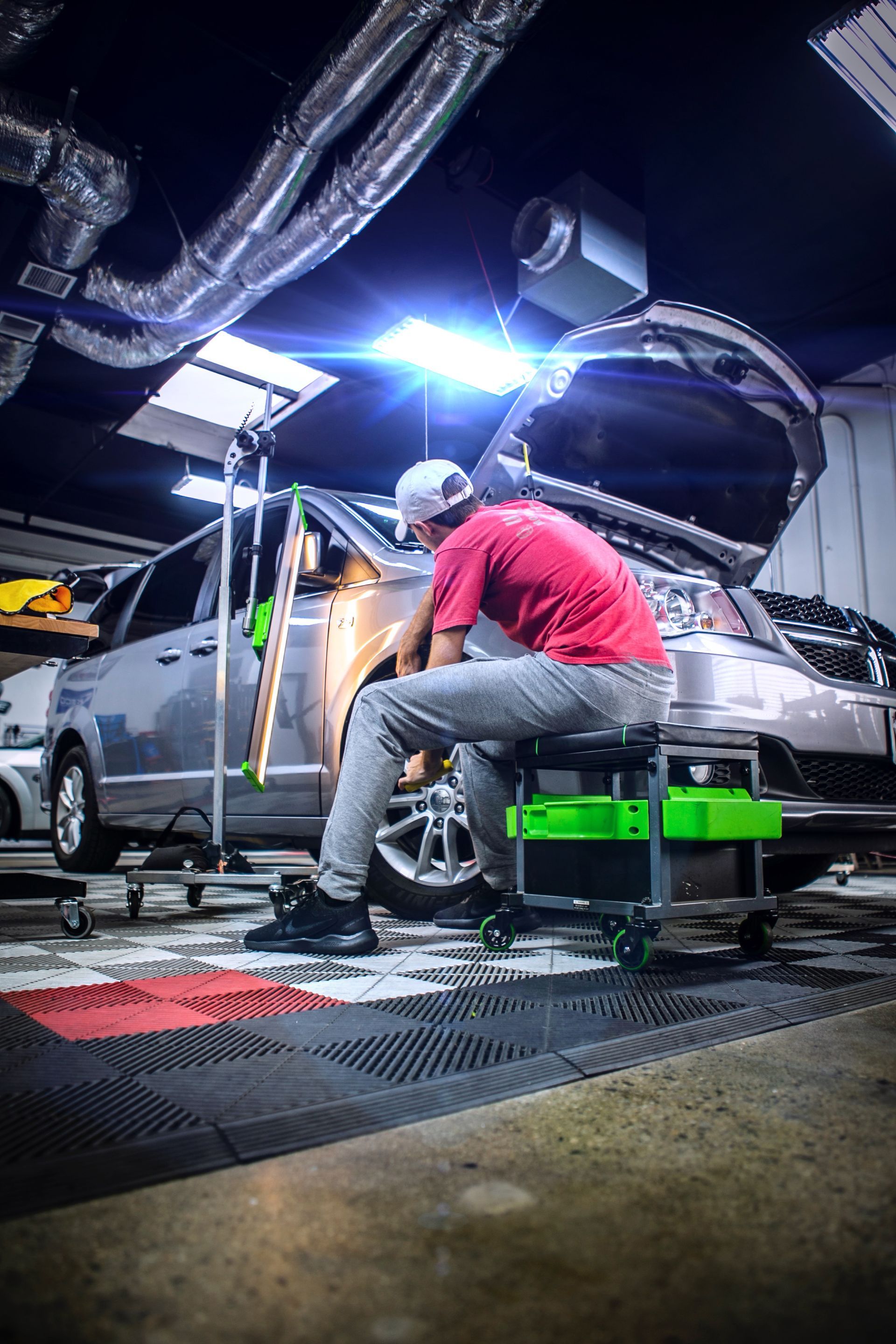
During the 1990s, PDR became more standardized. Specialized tools—steel rods, whale tails, knockdowns, glue-pulling systems, and lighting/reflection boards—were developed and commercialized. Training programs, certification bodies, and professional associations emerged, helping formalize the trade. Insurance companies increasingly accepted PDR as a preferred repair method for hail and minor dent damage due to its cost efficiency and preservation of original paint.
Technological Advancements (2000s–2010s)
As automotive design evolved, so did PDR. High-strength steels, aluminum panels, complex body lines, and improved paint systems required new techniques and tools. LED lighting systems improved precision, while glue-pulling technology expanded PDR’s applicability to areas with limited backside access. PDR also became common in dealership reconditioning and lease-return programs.
Modern PDR (2020s–Present)
Today, paintless dent repair is a globally recognized repair discipline. It is widely used for hail damage, minor collision dents, crease repair, and cosmetic reconditioning. Advanced technicians can repair damage once considered impossible without repainting, including dents on aluminum panels and complex contours. PDR is valued for maintaining vehicle resale value, reducing repair time, and minimizing environmental impact by eliminating paint and filler use.